

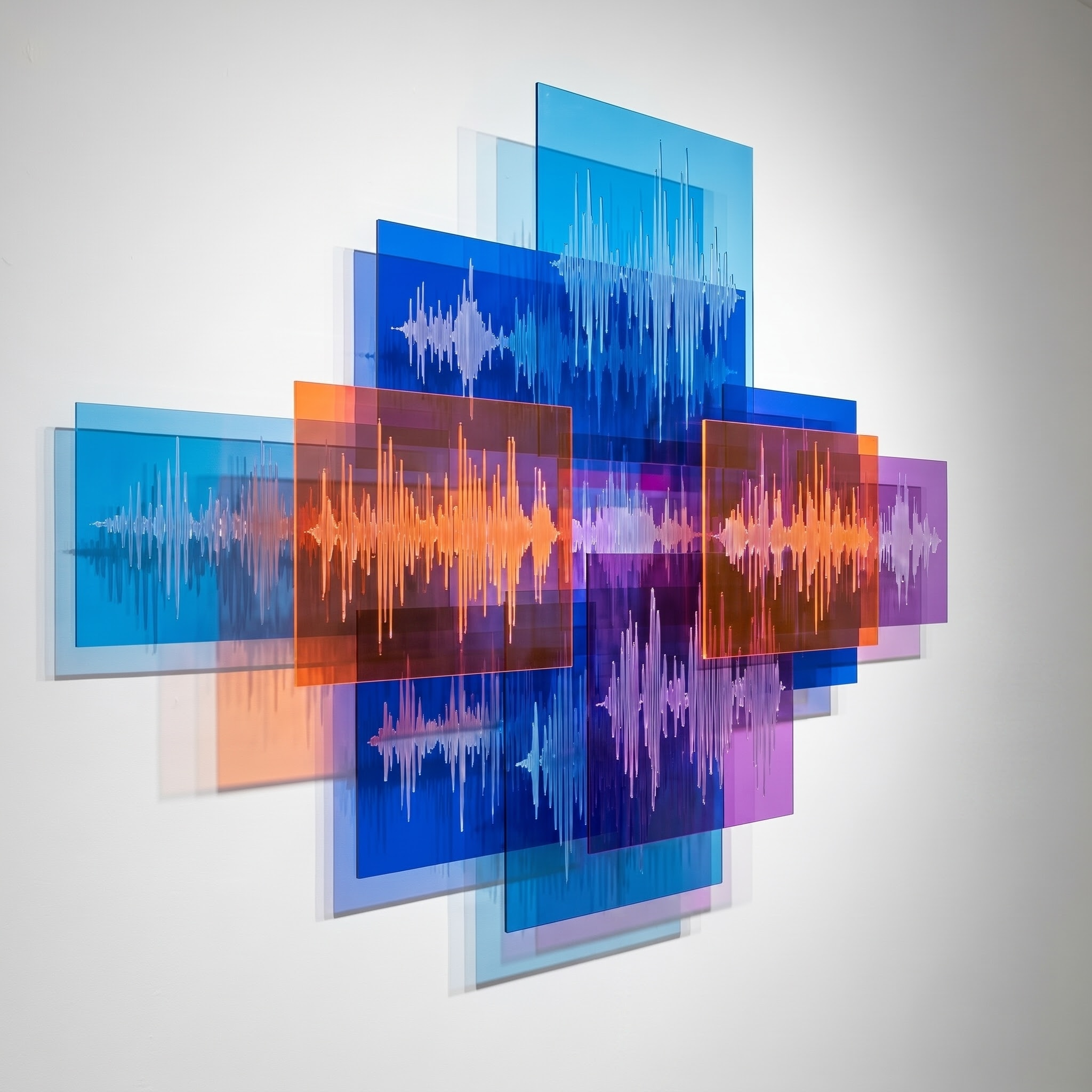
There is a specific, terrifying moment in every film composer’s workflow.
It’s the moment you finish a sweeping, heroic, or heartbreakingly beautiful orchestral arrangement, you drop it into the timeline, and you press play. You watch the scene unfold, expecting a cinematic triumph, only to realize that your beautiful melody is effectively “fighting” the lead actor. It is masking the dialogue, competing with the crunch of footsteps on gravel, and drowning out the subtle, atmospheric hiss of a wind machine.
In those moments, you realize that film scoring isn’t actually about writing “music.” It is about managing frequency real estate.
The Frequency War
When we compose for concert halls, we are the center of the universe. We have the entire spectrum—from 20Hz to 20kHz—at our disposal. But in film, the composer is a guest in a house already occupied by the Director, the Sound Designer, and the Dialogue Editor.
The most modern, effective way to approach a score is to stop thinking about “melody” and start thinking about “frequency gaps.”
The human voice—the most vital element of any film—lives primarily in the mid-range (roughly 1kHz to 5kHz). If your score is heavily saturated with mid-range textures, brass, or thick string clusters, you aren’t supporting the story; you are obscuring it. To master the “Sonic Shadow,” you have to learn to compose in the areas the dialogue leaves behind.
Scoring the Sub-Low and the Ultra-High
The most profound cinematic moments often happen in the “extremes.”
When a scene requires tension but needs to maintain clarity, the secret isn’t a loud, pulsing string section. It’s a low-frequency drone—a weight that the audience feels in their chest before they hear it in their ears. By focusing your composition in the 40Hz to 150Hz range, you provide an emotional foundation that sits beneath the dialogue, never once competing with the spoken word.
Conversely, there is a way to add “air” to a scene without adding “noise.” By utilizing ultra-high-frequency textures—the shimmering friction of a bowed cymbal or the delicate, granular hiss of a synthesized pad—you can create a sense of vastness and atmosphere. These sounds live in the 8kHz+ territory, a space that is often empty in a standard mix, allowing you to add “shimmer” without ever muddying the mid-range clarity of the actors’ voices.
The Composer as Sound Designer
The line between “Music” and “Sound Design” has almost entirely evaporated in modern scoring. Think of the works of Hildur Guðnadóttir (Chernobyl) or Mica Levi (Under the Skin). These scores don’t rely on traditional melodic development; they rely on the manipulation of texture and timbre.
To excel in this niche, your toolkit shouldn’t just be MIDI orchestrators. It should be granular synthesis, field recordings, and frequency-specific processing. You aren’t just writing notes; you are sculpting a sonic environment.
The goal is to create a score that is “invisible.” When done correctly, the audience shouldn’t be able to point to the “music.” Instead, they should simply feel an inexplicable sense of dread, or a sudden, soaring warmth, unaware that the emotion was triggered by a subtle shift in the sub-bass or a haunting, high-frequency texture sitting perfectly in the gaps of the soundscape.
The greatest achievement in film scoring isn’t being heard—it’s being felt.
Related Posts
The Rise of Haptic Music: When Touch Becomes the New Stereo
Is haptic music the next big leap, or just another gimmick? Have you…

Diary of an “I”: The Guilt of Easy Creation
Have you ever felt this strange guilt when music making became too easy? Or do…
Scoring for Silence
Do you struggle with "over-producing" your tracks? How do you use negative…
